Services located 01
Assess & quote
Site visit, plan review and Dial Before You Dig. One clear quote covering dig, cartage and cleanup.
Five Dock is an Italian-heritage cottage suburb on shale-and-sandstone, basement, pool and knock-down work. The regular jobs here are basement digs, underpinning and pool digs. Services located first, sites left level and clean.
Get a free quoteNo obligation, free site quote.
Got it, thanks. We'll be in touch to arrange your site assessment and clear quote.
From a knock-down rebuild to a new estate pad, each service has its own page with the detail.
Five Dock sits about 9 kilometres west of the city. The markers are Great North Road, Five Dock shops and Barnwell Park Golf. It's ringed by Wareemba, Russell Lea, Abbotsford, Drummoyne, Haberfield and Canada Bay. What's changing: basement digs and underpinning under terraces, and granny flats and rear pools on the small lots.
Around Five Dock, near Great North Road, you're mostly on victorian and Federation terraces and semis, with heritage conservation areas throughout. Near Great North Road, the heritage streets carry conditions near the listed houses. Day to day around Wareemba that's basement digs, underpinning and pool digs.
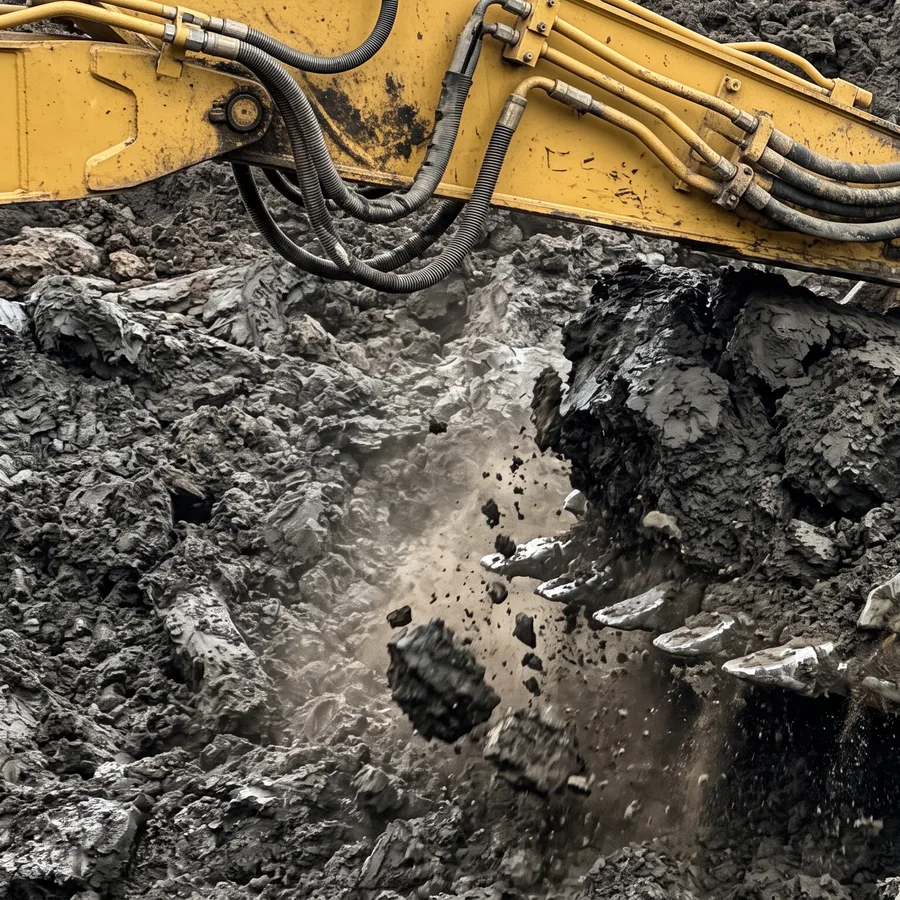
Five Dock, near Great North Road, is on Wianamatta shale over sandstone on the peninsula ridge. Toward Five Dock shops the sandstone starts early, so Five Dock digs are planned around rock from day one and sawn on the lines. Around Russell Lea, the clay is reactive, so fill goes in in compacted layers.
Five Dock falls under City of Canada Bay, with heritage and tree protection controls checked at Great North Road before the plans are followed. Machines reach the Five Dock block off Ramsay Road or Great North Road, and it's tight to get a truck down the inner streets, out toward Wareemba.
Every job follows the same sequence, whether it's a single trench or a full site cut.
A trench can be a day, a basement can be weeks. Dates come with the quote, not after.
Five Dock and the streets around it, from the older estates to the new blocks.
From the older streets to the newer blocks, Five Dock and the suburbs around it. If you're anywhere in the Five Dock area, we can get to you.
See the whole Inner West →It depends on the volume of material, the ground (wianamatta shale over sandstone on the peninsula ridge), access for the machine and how far spoil has to be carted. Every job gets a written quote after a site look, with the dig, cartage and cleanup spelled out, so you know what’s included before anything starts.
Usually, if the excavation is part of a build. Cut and fill beyond set limits, work near boundaries and anything on a lot with a flood, bushfire or heritage overlay needs approval as part of the DA or CDC. We work to the approved plans; check with your certifier before the dig is booked.
A trench, pool dig or single pad is a day or two; a knock-down site cut or a basement runs longer and depends on volume, ground and weather. Dates come with the quote, not after.
Yes. Wianamatta shale over sandstone on the peninsula ridge. The ridge suburbs sit on sandstone at or near the surface, often right under the floorboards of a terrace. It’s sawn against the party walls and broken out, and it’s in the quote from the site look.
Yes, and it’s one of the most common Inner West jobs. The house is supported to the engineer’s underpinning design, the ground under it is dug in stages through the front or rear, and rock is sawn at the party walls so the neighbours’ footings stay put. Spoil goes out by conveyor.
Through the house on boards with the floor protected, or over the back fence by crane. Spoil comes out the same way or by conveyor into a skip in the lane. Slower than a side gate and priced for it, but it’s how most Inner West yards get dug.
Conditions on the approval, usually about keeping the front of the house, protecting the neighbours’ walls, and sometimes an archaeologist watching the dig on the oldest streets. Haberfield and the older parts of Balmain, Glebe and Marrickville are the strictest. We dig to what’s approved.
Reactive clay. It swells in wet winters and shrinks in dry summers, and anything poured on loose or uncompacted fill moves with it. A pad cut and filled in compacted layers to the engineer’s spec is what stops the new slab doing the same thing.
Tell us about the job. We'll look at the site before quoting, so you know what's included before anything starts.
Request received. We'll be in touch to arrange your site assessment and clear quote.